Recovering Declining eShare
How we rebuilt Proximus' digital ordering model to reduce friction, restore conversion, and reposition digital as the primary sales channel.
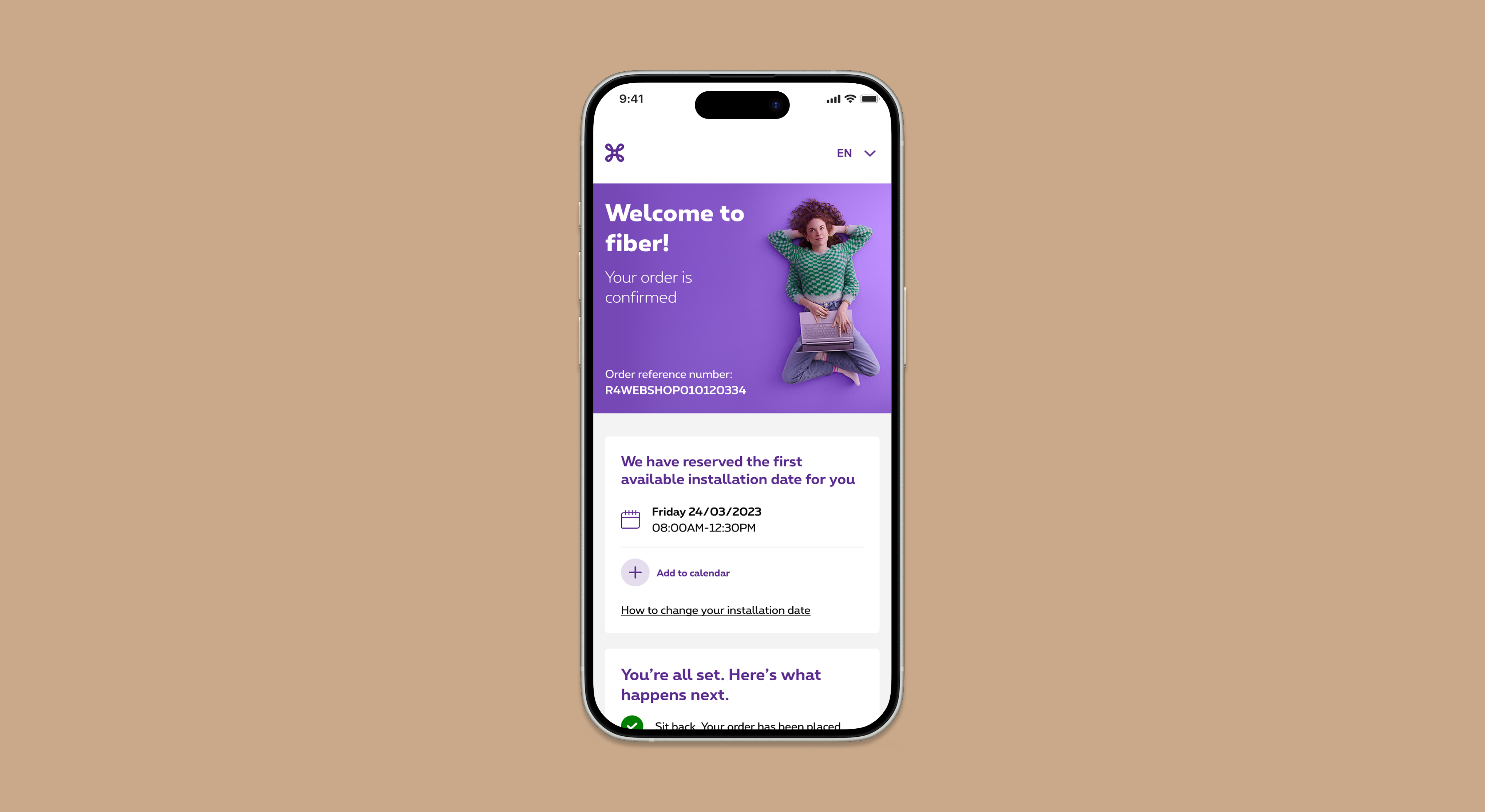
Proximus was experiencing a sustained decline in its digital sales share (eShare), alongside an increase in support calls, signalling a breakdown in the digital ordering experience. As customer expectations shifted toward seamless, self-service journeys, the existing checkout remained fragmented, inconsistent, and misaligned with both user behaviour and business goals.
I contributed to the redesign of the end-to-end ordering experience, focusing on simplifying journeys, aligning product strategy with user expectations, and addressing structural points of friction across the funnel. This led to a more coherent, scalable ordering model, improving conversion, reducing reliance on support channels, and repositioning digital as the primary sales channel.
The decline was not driven by a single issue, but by a structural mismatch between digital experience, user expectations, and business strategy.
The existing ordering flows were overly complex, inconsistent, and designed around edge cases rather than the majority of users. This resulted in confusion, friction, and a high cognitive load throughout the journey.
Critical steps such as identification and installation introduced friction, suffered from technical limitations, or lacked transparency — leading to high drop-off and increased support demand. Proximus' fibre-first strategy was also not effectively translated into the digital journey, creating a gap between business priorities and the user experience.
Digital journeys did not reflect user expectations of simplicity and self-service
Business priorities were not clearly translated into the experience
Critical steps introduced unnecessary friction and drop-off
We aligned on transforming the ordering model rather than continuing to optimise individual flows. The objective was to create a simpler, more coherent system that could support both conversion and long-term scalability.
The redesign was anchored in a clear principle: radical simplification. Rather than designing for edge cases, the focus shifted to the majority of users — removing unnecessary complexity, aligning flows with mental models, and creating a more predictable and consistent experience.
Aligning product strategy with the experience
Rather than framing the experience around fibre eligibility, we introduced a personalised entry point through an improved address check. This allowed users to see relevant offers from the start, eliminating disruptive product switches later in the funnel — a major source of drop-off in the legacy experience.
Simplifying critical conversion steps
By analysing usage patterns, we identified that over 80% of successful checkouts used itsme, Belgium's leading digital ID method. We simplified the experience by prioritising itsme as the default — redesigning the step to improve performance, clarity, and control, and enabling continuous optimisation of a previously opaque part of the journey.
Enabling self-service for installation
Installation was a major source of friction for fibre customers facing long delays and uncertainty. We introduced a flexible model allowing eligible users to choose self-installation — aligning backend logic with frontend experience to ensure options were only presented when valid, combining clearer communication with improved system logic.
This resulted in a redefined digital ordering model — improving conversion, reducing friction, and restoring the role of digital as a primary sales channel. Beyond performance, the initiative introduced a more collaborative governance model, positioning design as a strategic partner in shaping business outcomes.
Completed orders
Improved end-to-end conversion
Identification completion
Drop-off at a critical step reduced
Self-installation adoption
Accelerating self-service behaviours
The redesign also led to a measurable reduction in support calls — a signal of clearer journeys, greater customer confidence, and reduced reliance on assisted channels.
Design is not just about reducing friction, but about aligning systems, strategy, and experience to create meaningful, scalable impact.
This project highlighted that improving performance at scale requires more than optimising individual touchpoints — it requires rethinking the system as a whole.
What initially appeared as a conversion issue revealed deeper structural challenges across product strategy, technical dependencies, and organisational ways of working. Addressing these required not only design changes but closer collaboration across product, tech, and business teams — ultimately positioning design as a strategic partner in shaping business outcomes, not just execution.