Redefining Product Strategy at Arteïa
How research-led insights repositioned Arteïa around private collectors, shifting the product away from a declining trend toward long-term value.
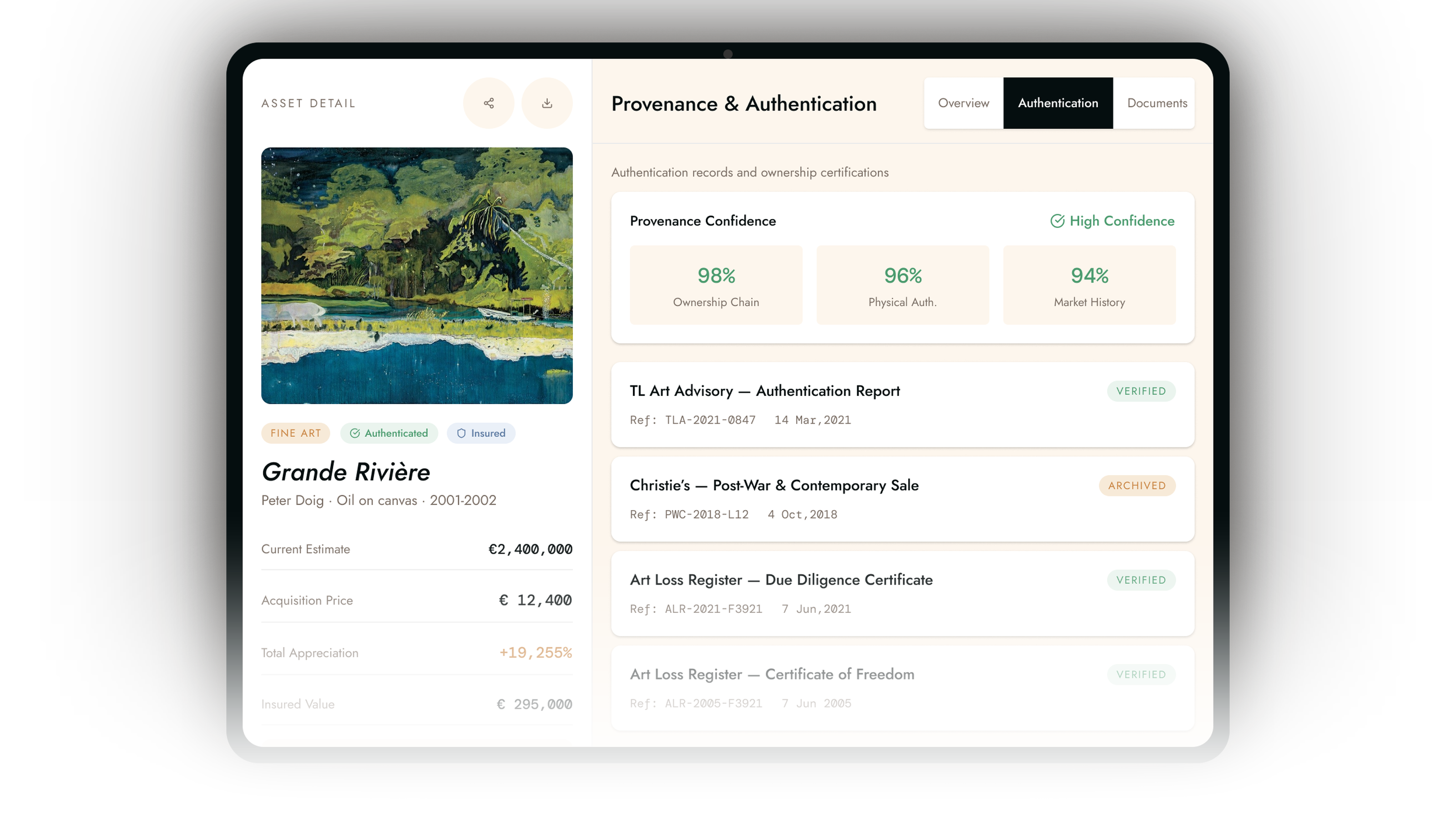
Arteïa was established during the NFT boom, with a product strategy heavily dependent on the continued growth and perceived value of NFTs. As market dynamics shifted, the platform began to lose relevance, revealing a deeper structural issue: its value proposition was tied to a trend that was no longer sustainable.
I was brought in to extend core functionality. Leading user research alongside the team running product demos, I surfaced a different finding: the platform wasn't really working for the audiences it claimed to serve — it was working for collectors, who were already the de facto core user base. The case I built from that research helped surface a strategic reframing to leadership.
This led to repositioning Arteïa around private collectors as the core audience, decoupling the platform from NFT dependence, and reorienting toward multi-asset collection management built for real-world usage. I contributed to the design of the new direction.
Arteïa's challenges were not isolated UX issues, but a structural misalignment between its value proposition, its audience, and the market it operated in.
The product was built around NFTs at a time when interest was already declining, making its core offering increasingly less relevant. At the same time, it attempted to serve galleries, collectors, and artists equally, resulting in a diluted experience that failed to fully support any of them.
This was further compounded by positioning Arteïa within the gallery tooling space, which was already saturated, limiting its ability to differentiate or create meaningful value.
Operationally, the product was also misaligned with how users engaged with art in practice. While collectors operate in dynamic, real-world contexts — fairs, meetings, private viewings — the experience remained largely desktop-based, creating friction and limiting adoption.
The challenge was not to improve the interface, but to redefine Arteïa's role within the art ecosystem and establish a value model that could sustain long-term relevance.
We aligned on reworking the product's core positioning, with feature-level design then flowing from that strategic shift. The objective was to establish a model that could support both immediate user needs and a more sustainable role within the art ecosystem.
Establishing a clear centre of gravity
The user research I led revealed that private collectors were already the majority of the user base, but the product had not been designed around them. The case for repositioning around collectors was built from this finding and adopted by leadership. The vision wasn't a collector-only platform but a shared one — collectors at the centre, with the wider network around them (art advisors, auctioneers, valuers, gallerists, insurers, museums) able to contribute, view, and transact against the collection in defined ways. This shifted Arteïa from a fragmented multi-audience product into a structured ecosystem with a clear primary user and supporting professional roles.
Redefining the value model
To ensure long-term relevance, the product was decoupled from its dependency on NFTs. NFTs became optional rather than foundational, allowing the platform to focus on more stable and enduring value: collection management, provenance, and ongoing engagement. The research also revealed that collectors' collections extend well beyond contemporary art — design objects, watches, fashion, books, and other assets — so the cataloguing model was expanded to support multiple asset types. I contributed to the design of the new multi-asset model, positioning Arteïa as a holistic collection management platform.
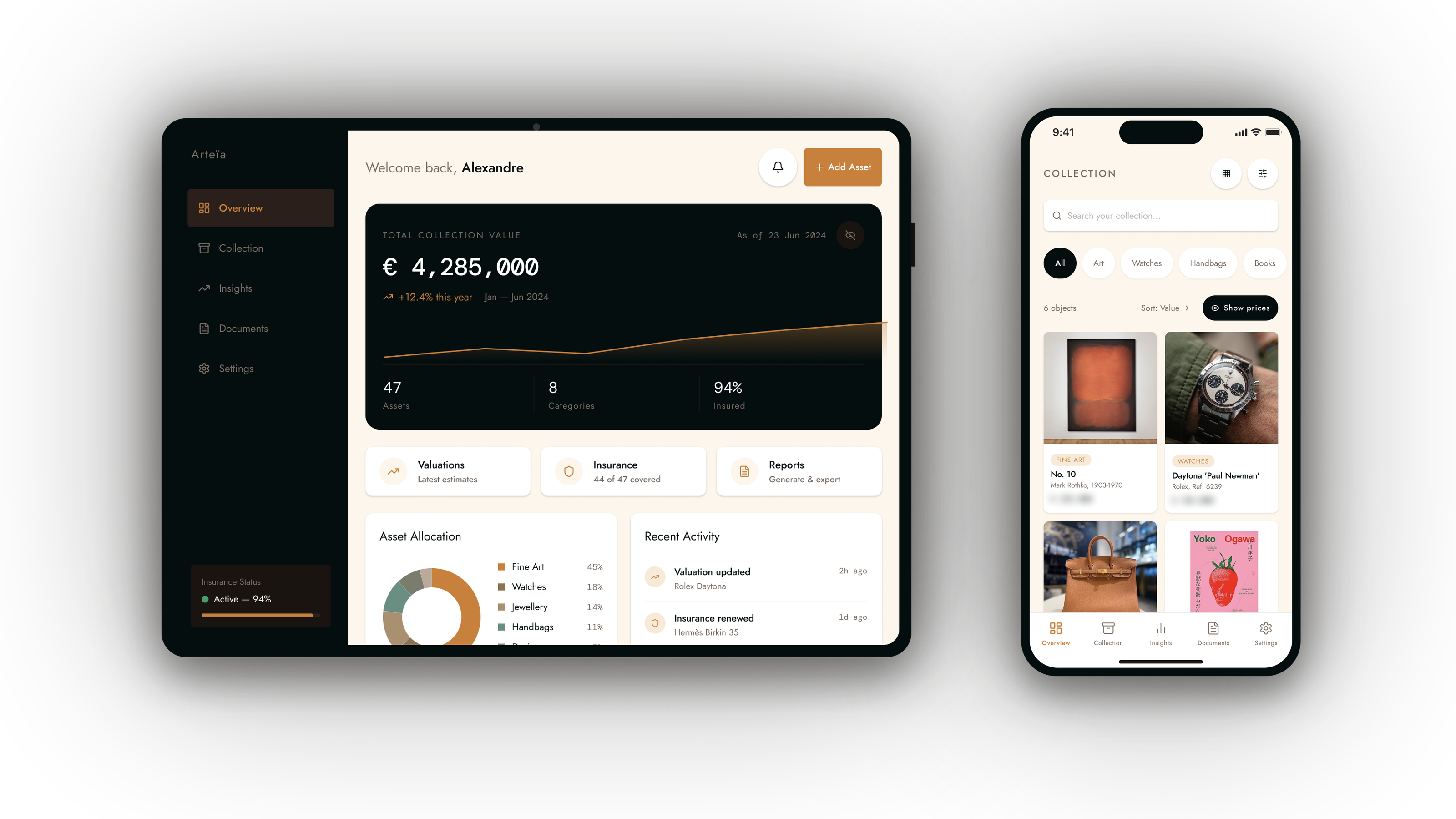
Reorienting the experience around real-world usage
Collectors needed to catalogue, access, and share information in real-world contexts — fairs, meetings, private viewings — but the experience remained desktop-heavy. I contributed to the redesign of key workflows around mobile and on-the-go usage, supporting direct cataloguing, quick access to collection data, and document management in context. The desktop experience remained the reference platform, supporting the full depth of the product while ensuring consistency across devices.
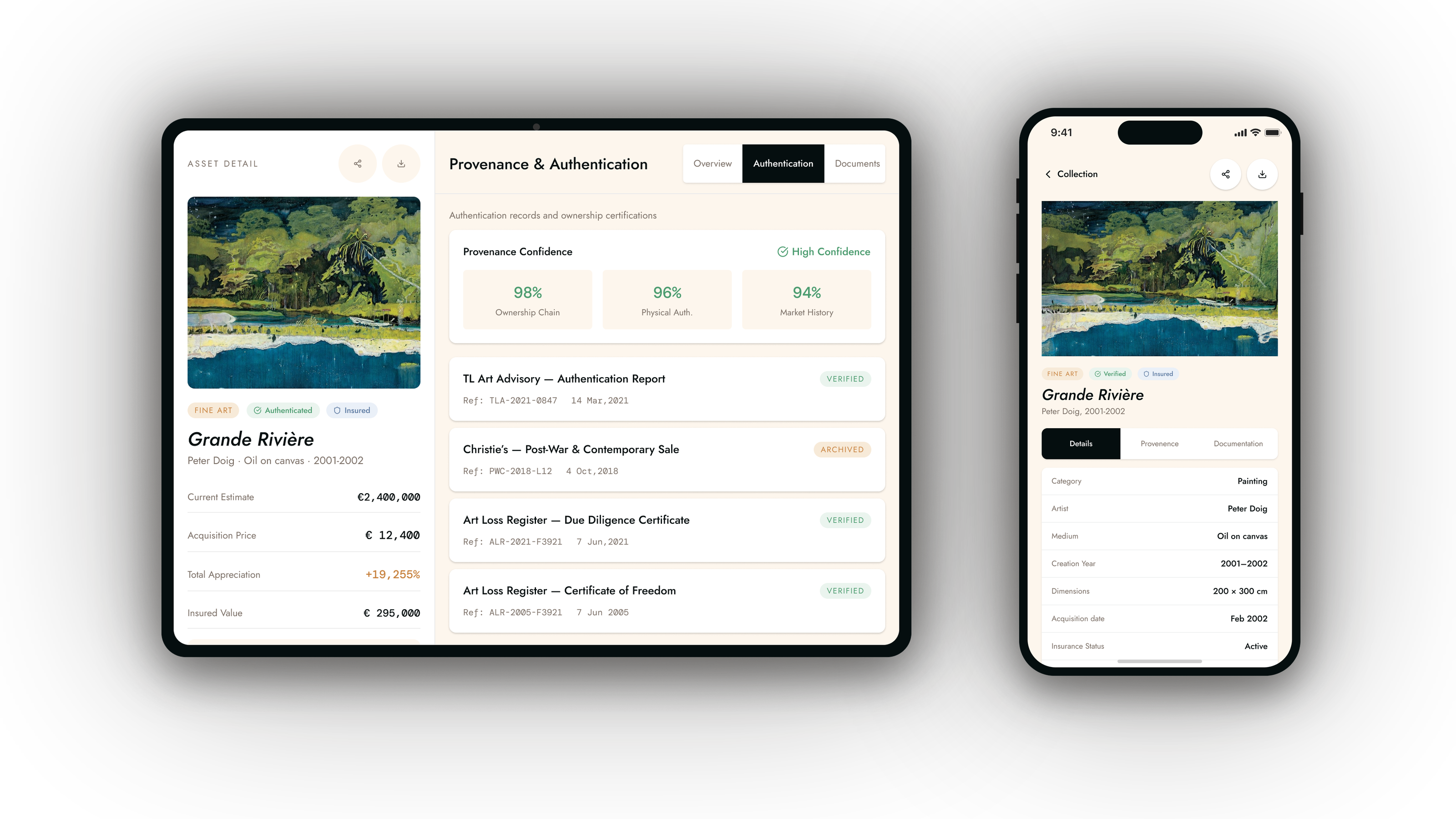
The work led to a strategic redirection of Arteïa's product around private collectors and multi-asset collection management — built for real-world usage. The repositioning informed how the product evolved after I left, though the company also continued investing in adjacent NFT-driven initiatives outside the scope of what I'd proposed. Where the previous strategy had tied the company's relevance to a declining trend and a diluted audience, the redirected product had a clear core user, a defensible value model, and a working position within the art ecosystem.
The brief was to extend the product. The research said: build a different one.
The brief was an extension job. The user research I led, alongside the team running product demos, surfaced a different finding: the platform wasn't working for the audiences it claimed to serve.
From there, the work shifted from improving the existing product to building the case for what the product needed to become. That required leadership to question Arteïa's original raison d'être and act on findings that hadn't come from the strategic plan.
The lesson the project leaves me with is that design's most useful contribution, sometimes, is to challenge the brief itself — and to bring the evidence that earns the challenge.